Can AI Actually Deliver True 1:1 Personalisation?
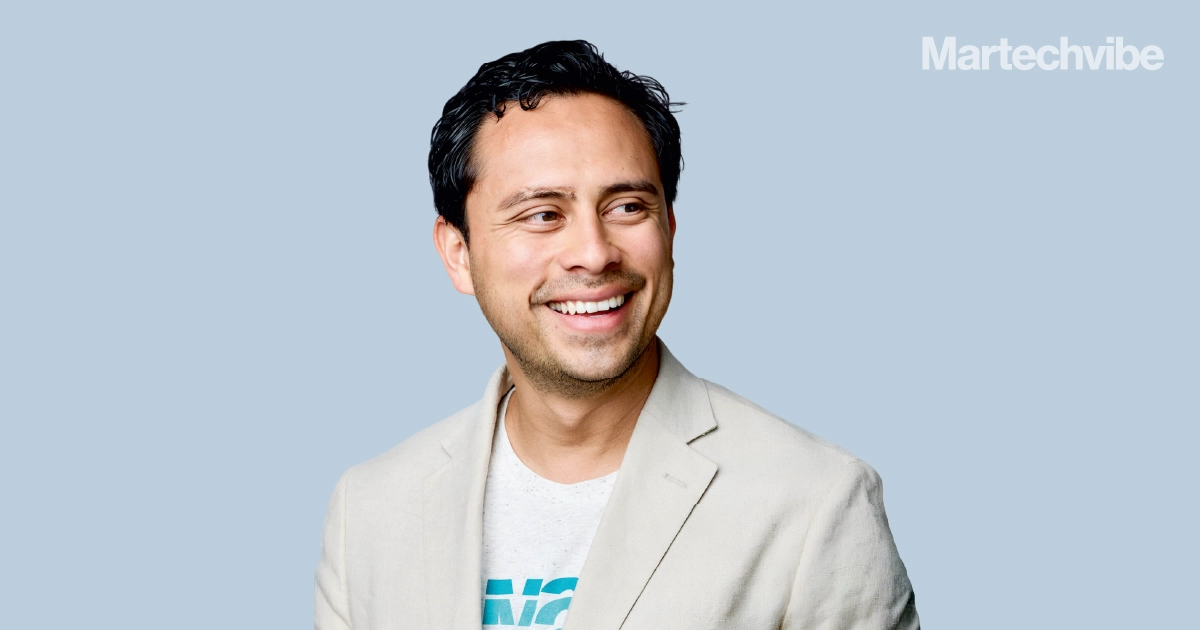
Personalisation used to be a campaign humans planned and a system delivered. Now it is a continuous decision an agent makes — every millisecond, across every channel, against the full depth of the profile, not the five attributes that fit in an email tool, says Rafael Flores, Chief Product Officer at Treasure AI.
Topics
Marketing has never lacked ambition when it comes to personalisation. The industry has spent years promising experiences tailored to every individual, delivered at precisely the right moment through the right channel.
Yet despite increasingly sophisticated tools, most consumers still encounter messages that feel generic, mistimed, or disconnected from their actual needs.
The problem, according to Rafael Flores, Chief Product Officer at Treasure AI, is not that personalisation failed. The underlying infrastructure did.
As artificial intelligence moves from assisting marketers to acting on their behalf, longstanding weaknesses in customer data architecture are becoming impossible to ignore. Fragmented profiles, disconnected systems, and slow execution cycles are colliding with a new reality in which AI agents are expected to make decisions, orchestrate journeys, and activate experiences in real time.
That shift is prompting a broader rethink of the customer data platform itself. In place of the traditional “golden record,” Flores argues that enterprises now need what Treasure AI calls a “Diamond Record”—a governed, identity-resolved foundation designed not only for human users, but for AI systems operating at machine speed.
In this interview, Flores discusses why personalisation has struggled to meet expectations, what AI-native customer infrastructure looks like, and why human judgment remains the most important component in an automated future.
Excerpts from the interview;
Why has the industry struggled to close the gap between the promise of 1:1 personalisation and reality?
For years, 1:1 personalisation has been one of the most repeated promises in marketing technology, yet most consumers still feel like brands barely understand them.
The reason: the industry sold personalisation as a campaign output when it is actually a data problem. You cannot personalise what you have not unified. Most brands run on five attributes per customer scattered across fifteen systems — not the 500 attributes a real understanding of a person requires.
The second gap is clock speed. Buying behaviour moves on weekly signals; most marketing systems move on quarterly cycles. By the time a segment is built, exported, and activated, the moment is gone. That is not a personalisation failure — it is a tempo failure.
Personalisation didn’t fail. The plumbing did, and the clock did.
That is exactly the gap Treasure AI Studio is built to close — brief in plain English, audience-generated against the warehouse, activated end-to-end in under fifteen minutes. Same brief, faster.
That is what 1:1 looks like when the system finally matches the customer. That’s what it looks like when AI integration finally meets the needs of the marketer.
With AI, we’re seeing timing fundamentally transform. We’re learning faster by minutes, not weeks or months. AI is closing the gap.
What does the shift from “golden record” to “Diamond Record” really represent?
It’s a technology upgrade and a change in how enterprises understand customer identity in the AI era. But the deeper shift is philosophical. The golden record was built for a world where the user was a human looking at a dashboard once a week. One profile, one view, one query at a time. That world is gone.
In 2026, the primary user of customer data is no longer just a person — it is also an AI agent, calling an API thousands of times a second to decide the next message, the next channel, the next experience.
That user does not need a flat profile. It needs a multi-faceted, identity-resolved, governed source of truth that holds across every ID graph and every channel.
A golden record is a snapshot. A Diamond Record is a foundation that AI agents can act on — at machine speed, harnessed by human judgment.
It’s not just a rename. It reflects a category shift: the CDP has evolved from a human interface into agent infrastructure.
The Diamond Record is what makes that infrastructure trustworthy enough for an enterprise to actually let an agent run. No matter what systems are in a company’s stack, the Diamond Record provides a single source of truth.
How do you operationalise ethical AI beyond the marketing language?
When growth targets intensify, principles often get tested. The big question is how to make trust, governance and privacy real?
You make them architectural, not aspirational. If governance is a slide, it gets cut the first time growth slips. If it is how the system is built, it cannot be cut without breaking the product. We chose the second path on purpose.
Three commitments are non-negotiable in every Treasure AI deployment:
- Customer data stays in the customer’s warehouse. Composable Audience Studio is zero-copy on Snowflake, Databricks and BigQuery — we never take possession.
- Every agent action is auditable and lineage-tracked end-to-end, so the data team never loses visibility.
- Privacy is the default. RBAC (Role-Based Access Control), masking and consent rules carry through unchanged from the warehouse to the activation layer.
Brands trust Treasure AI because governance and privacy aren’t just features. They’re how the system is built.
Ethical AI, in practice, is a design constraint. The agent doesn’t just accept guardrails; it is architected around them. The team sets the budget ceiling, and the agent stops before it is reached.
The team approves the brief, and no message goes out without it. That is how principles survive a time of constriction and are sustained within healthy margins.
Across SaaS, AI, IoT and enterprise platforms, what has fundamentally changed about personalisation, and what is still exactly the same?
A way to rephrase the question: How has personalisation changed in the AI era, and what stayed the same despite the hype? What I have seen change completely is the unit of execution. Personalisation used to be a campaign humans planned and a system delivered.
Now it is a continuous decision an agent makes — every millisecond, across every channel, against the full depth of the profile, not the five attributes that fit in an email tool. Speed went from weekly to instantaneous. Depth went from a handful of fields to hundreds. The scale went from segments to individuals.
What has not changed at all: the customer still wants to feel known, not targeted. Trust is still the currency. A brand that personalises without warmth comes across as surveillance, no matter how good the model is.
AI is muscle. Humans are the mind and the heart. The hype cycle keeps forgetting which is which.
Every era I have worked across has confirmed the same lesson: the technology gets faster, but the bar set by the customer doesn’t move. They want relevance, respect and a reason to come back.
Our job is to give marketers the muscle to deliver that at machine speed without losing the human judgment that made the brand worth choosing in the first place. Though we now live and breathe in the world of AI, there is and always should be a human in the loop. AI doesn’t eliminate human value; it amplifies it.
As CPO, how do you decide what should be built versus what simply can be built?
As CPO, I straddle engineering ambition, customer expectation and business pressure. The rub is to determine which one to prioritise. Here’s how I’ve figured it out: I run every roadmap candidate through three filters, in this order:
- Does it move a real customer outcome — revenue, cost, churn, time-to-value? If the answer is “it’s a cool capability,” it is not a product yet.
- Can it be governed by default? If we cannot ship it with the same audit, lineage and consent posture as the rest of Treasure AI, we do not ship it. Speed without governance is a liability we hand our customers. I’m not interested in that.
- Does it respect the harness? Every AI we build is harnessed by human warmth and creativity. It’s not just supervised, but harnessed. If a feature pushes the human out in a place where judgment matters, it fails the test, no matter how impressive the demo.
“Can be built” is an engineering question. “Should be built” is a trust question. We answer the second one first.
The forcing function is our FY27 promise to customers: move at the speed of now. That means brief-to-live in minutes, governed end-to-end, with a human in the driver’s seat. If a feature accelerates that — we build it. If it just adds surface area — we don’t. That discipline is how a product organisation stays honest when the pressure is on.
The CPO’s job is to believe deeply in progress while transforming ambiguity into momentum. It’s my task to help move the MarTech industry from AI-enabled systems to AI-native platforms designed for scale, intelligence and real customer value. That all takes real thought and consideration.
I’ve seen a radical change in the CPO’s role in the era of AI. It’s become less about managing roadmaps and more about continuously shaping the future of business through product innovation. The product matters more now than ever.
ALSO READ: Designing for Generosity – How Small Moments Drive Big Impact