There is a $100M Growth Opportunity Hiding After App Acquisition
REPLUG's Lorenzo Rossi on why app businesses may find their next major growth opportunity in repeat purchases, customer retention and the journeys they have already paid to create.
Topics
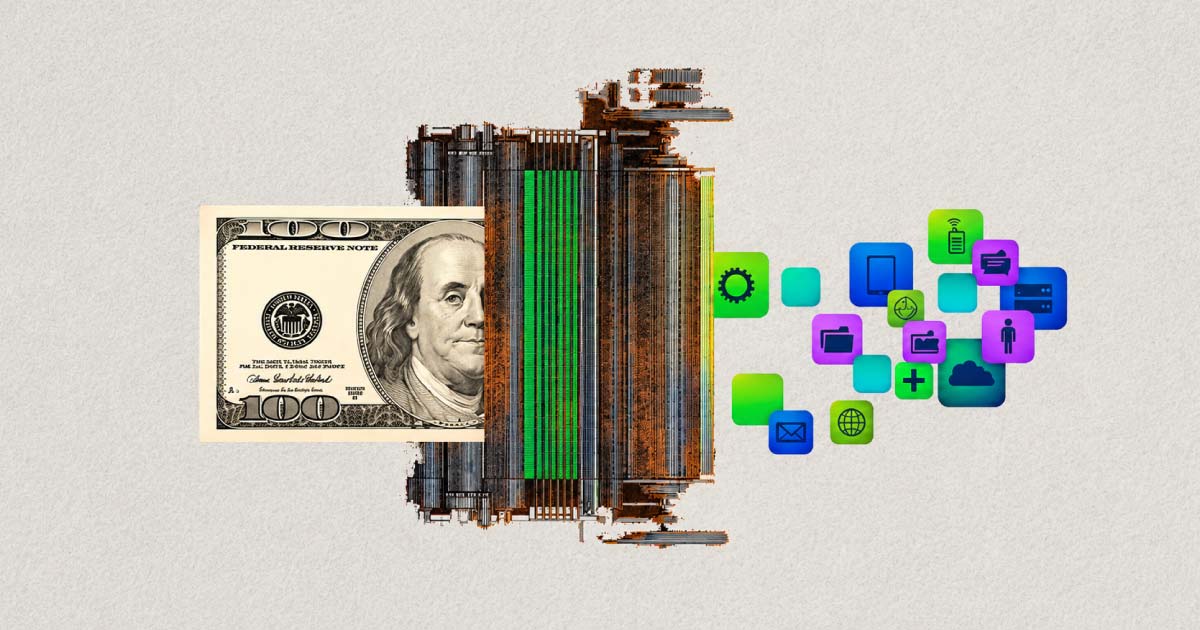
A grocery delivery business generating approximately $2.3B in annual revenue had a second-purchase problem. Between 40% and 46% of its first-time customers returned within 14 days, depending on the business. What if that figure improved by just five percentage points?
An analysis by REPLUG estimated that the change could unlock between $50M and $100M in additional revenue. The opportunity was not in finding another audience or increasing advertising expenditure. It was in getting more customers who had already made a first purchase to return.
The finding raises a difficult question for an industry that has spent years making acquisition more sophisticated: how much growth is being lost after the download?

Lorenzo Rossi, Co-Founder of REPLUG, sees this gap repeatedly in his work with mobile businesses. Companies can spend heavily to bring people in while overlooking the reasons they do not convert, return or spend again.
The question is whether app businesses have become so focused on the cost of acquiring a customer that they have lost sight of what that customer is worth.
The Install is Not the Outcome
The acquisition dashboard can tell a reassuring story. CPI is healthy, downloads are climbing, and campaigns are delivering against their targets. The business, however, may be getting more expensive to grow.
Rossi has encountered companies spending hundreds of thousands, sometimes millions, on user acquisition every month, with sophisticated campaign structures and experienced performance teams. The problem often becomes visible only when advertising numbers are compared with what customers actually do.
“A company might have a perfectly healthy CPI, but its cost per paying customer keeps increasing,” he says. “Users install the app but never complete onboarding. They start a free trial but never subscribe. Or they make their first purchase and never come back.”
The distance between an install and a paying customer is where acquisition efficiency can begin to unravel. A campaign may be doing its job, but the business is not necessarily converting the demand it has paid to generate.
Rossi points to a familiar organisational problem. Performance teams are judged on acquisition costs, product teams on activation and other teams on retention. Each may be meeting its own targets without anyone taking responsibility for the economics of the entire customer journey.
“The performance team focuses on acquisition costs, the product team works on activation, and someone else is responsible for retention,” he says. “Everyone has their own objectives and reports, and sometimes those reports tell completely different stories.”
There are a few places where this disconnect becomes particularly visible:
- The cost of a customer keeps rising: CPI remains healthy, but the cost of acquiring someone who actually pays increases.
- More downloads produce little additional revenue: Acquisition budgets grow while conversion rates and revenue per user remain flat.
- The first transaction becomes the last: Users register, purchase or subscribe once, but do not develop a habit of returning.
For Rossi, these are reasons to examine the existing customer journey before committing more money to acquisition. The main question now is whether it understands why the users it already has are leaving value unrealised.
The Revenue Already Sitting Inside the Customer Base
The grocery delivery analysis was built around a relatively simple behavioural question: what would happen if more first-time customers came back? That question changes how retention is treated. It is now a commercial lever with a direct bearing on revenue.
Rossi has seen similar opportunities in REPLUG’s work with other app businesses. In one delivery-app engagement, the team examined the customer journey and identified opportunities in onboarding and CRM.
Users who had registered but not completed their first purchase received more relevant communication, while existing customers were segmented according to their behaviour and encouraged to purchase again through targeted messaging and loyalty initiatives.
According to Rossi, the work produced a 24.7% increase in first-purchase rate, an 18.5% increase in repeat purchases and a 19.11% improvement in registration rate within three months.
The changes were not about sending more messages indiscriminately. They were about understanding where customers were in their journey and giving them a reason to take the next step.
Rossi describes a similar approach with a dating app, where loyalty initiatives and re-engagement campaigns were timed around moments when users were more likely to spend credits. With Tiimo, a productivity app, engagement campaigns were designed to reactivate users at the beginning of the week, when they were more likely to plan their activities.
The underlying idea is that customer behaviour is rarely uniform. A newly registered user, a first-time purchaser and someone who has not opened an app in weeks have different reasons for engaging.
“There’s often a lot of value still to be captured from them,” Rossi says, referring to customers businesses have already spent money acquiring.
The challenge is recognising that value before the next acquisition campaign becomes the default answer.
Diversification Means More Than Adding Another Ad Platform
When a major advertising platform becomes expensive or stops delivering, the instinct is often to find another one. But a longer media plan does not necessarily make a business more resilient.
“Adding TikTok to your Meta and Google campaigns can be a great idea,” Rossi says. “We’ve helped several companies scale successfully through new channels, and I’m a big believer in continuously testing new acquisition opportunities.”
His qualification matters. Diversification can create new sources of demand, but it can also reproduce the same dependence on paid acquisition across a larger number of platforms.
REPLUG’s work with KptnCook illustrates the difference between simply expanding a media mix and changing how acquisition is evaluated. The recipe and meal-planning app had limited room to scale through Meta and Google. The team expanded into TikTok, Reddit, Snapchat and IronSource, while improving event tracking and giving greater weight to trial starts and subscriptions.
According to Rossi, iOS media investment increased by 125%, while CPI declined by 17.5% and cost per trial fell by 15.9%.
Other businesses required a different route:
- Creator-led discovery: For PhotoSì, REPLUG used micro-influencers and content creators to reach new audiences. Rossi reports that TikTok scaled to six-figure monthly advertising spend, with a CPA 53.9% lower than Facebook.
- Measurement before expansion: Multipolls was heavily dependent on Google Ads and lacked reliable measurement. REPLUG supported its expansion into TikTok, Moloco, Meta, Jampp and Xiaomi, alongside an ASO strategy. Rossi reports a 191% increase in advertising spend, 74% revenue growth and cohorted ROAS of 273% in the best-performing month.
The examples are different, but the underlying issue is the same. A new platform is useful only if the business can establish what it contributes and whether the customers it brings in are commercially valuable.
Rossi also sees a less obvious part of diversification: the relationship a business maintains with customers after acquisition.
“If you’re spending millions acquiring users and have no effective way to engage them again, you’ll remain highly dependent on future advertising investment,” he says.
That dependence cannot be solved by adding another platform to the plan. It requires businesses to develop organic discovery, partnerships, referrals and CRM as meaningful sources of growth.
Growth Depends on What Happens After the Click
The advertisement has done its job. Someone has stopped scrolling, responded to the creative and clicked through. Then the App Store presents them with a generic page that could have been shown to anyone.
For Rossi, this is one of the more overlooked points of failure in paid acquisition.
“Then someone clicks on an ad, arrives at the App Store, and sees a generic product page that has very little connection to what convinced them to click,” he says.
The mismatch is particularly striking when businesses invest heavily in creative testing but give comparatively little attention to the destination. The message that creates interest and the experience that follows should be part of the same conversation.
REPLUG tested this with a classical music app running Facebook advertisements focused on Beethoven. Rather than directing users to a generic store listing, the team created a Custom Product Page featuring Beethoven-related content. Rossi says the change increased store conversion by up to 10%.
A dating app offered another example. Its user-generated content campaigns featured an influencer inviting people to find her profile inside the app. REPLUG created a Custom Product Page featuring the same influencer and her profile, maintaining the connection between the advertisement and the store experience.
“The conversion rate doubled,” Rossi says. CPI and cost per registration also decreased.
Neither intervention required a new acquisition channel. Both worked on the point where existing demand was being lost.
That is the larger point about post-click performance. A customer does not experience advertising, the App Store, onboarding and the product as separate departmental responsibilities. They experience one journey. A break in that journey can undermine the money spent at every preceding step.
Rossi argues that the paid acquisition and ASO teams need to work more closely to identify these opportunities. The same attention must extend into onboarding and the first meaningful product interaction.
An install may be the end of an advertising campaign’s reporting window. For the business, it is where the more important work begins.
The More Expensive Question Is What Happens Next
The app industry has become increasingly efficient at finding people willing to download a product. But acquisition alone cannot explain whether that growth is sustainable.
Rossi’s examples point to a broader set of decisions that app businesses need to make. They must understand which users are likely to become paying customers, what brings existing customers back and whether the channels they invest in are delivering value beyond the initial conversion.
None of this makes acquisition less important. New customers remain essential to growth. But the instinct to increase spending whenever performance slows can prevent businesses from examining the weaknesses in the journey they have already built.
The next growth decision may still involve a new campaign or a new platform. It may equally involve a better onboarding experience, a more relevant message or a store page that delivers on the promise of an advertisement.
The distinction is where businesses choose to look. More installs can increase the size of an audience. Making more of those customers return is what can change the economics of the business.
ALSO READ: 1,006 Patients Were Asked About AI. Where Should Healthcare Draw the Line?
Topics
About the Author
Ashutosh Zutshi is a correspondent exploring how brands are redefining marketing and CX. He uncovers the strategies, innovations, and trends shaping the way companies engage with audiences, turning complex developments into compelling stories that bring the evolving CX landscape to life.
View More