6 Marketing Shifts Driving Middle East’s Next Phase

Across the conversations at Vibe Marketing Tech Fest, Dubai, one idea surfaced repeatedly: marketing is becoming less about isolated metrics, channels and functions, and more about connecting the entire customer and business equation.

Topics

  • When you put senior marketing, growth, CX, data and technology leaders in the same room, the conversation quickly moves beyond the latest buzzword.

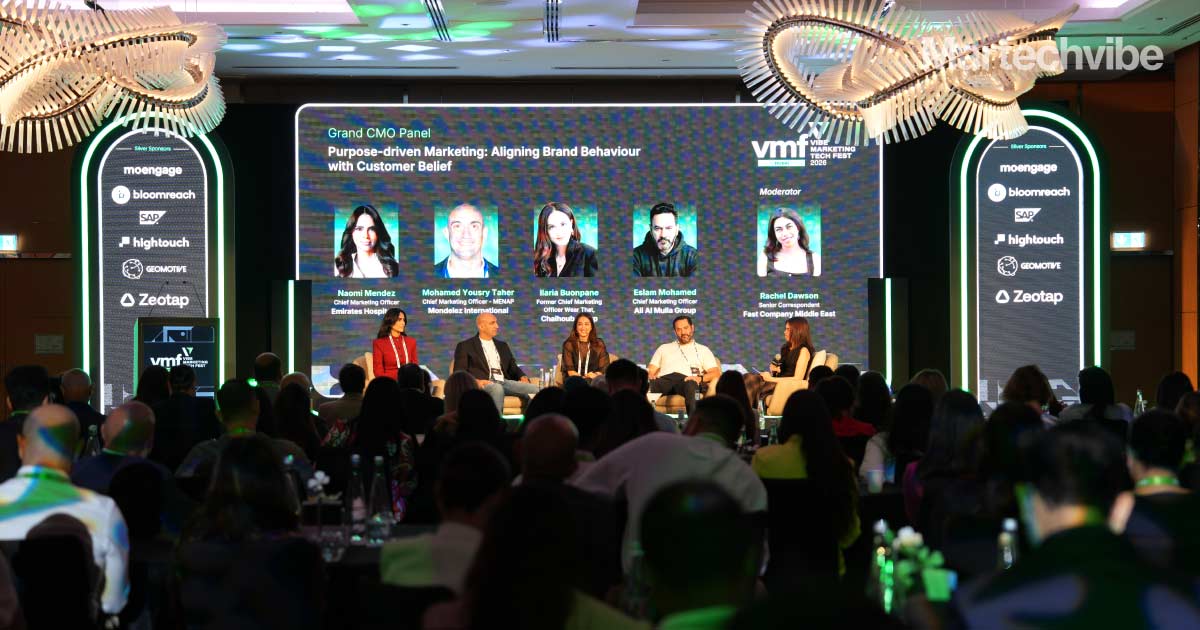
    At Vibe Marketing Tech Fest (VMF) Dubai, leaders from brands and technology companies across the Middle East explored what is changing beneath the surface of marketing, from the way businesses measure growth and loyalty to how AI is reshaping customer engagement, discovery and decision-making.

    There were different perspectives, but several themes kept coming back: acquisition needs to be connected to long-term value, loyalty needs to feel less transactional, attention needs better measurement, and customer data needs to become more actionable.

    Here’s what stood out.

    1. Stop Measuring Acquisition Without Measuring Who Stays

    For Álvaro Martínez, Sr. Director MENA – Growth Marketing and Pricing at talabat, growth marketing and pricing cannot be treated as separate disciplines when the real objective is sustainable growth. 

    Looking at acquisition costs without understanding the quality and longevity of the resulting customer can create a distorted picture of performance.

    “Of course, CAC / CPA discipline matters, capital efficiency is real, and it can become truly expensive if it is not in place. But the question should never only be “how cheaply can we acquire?” Rather, it should have been “how cheaply can we acquire someone worth keeping?” Those are different problems.”

    The shift is from optimising for the cheapest acquisition to understanding the economics of customers who stay, transact repeatedly and generate durable value.

    2. Loyalty Needs Both Logic and Emotion

    Ilaria Buonpane, Former CMO at Wear That, Chalhoub Group, argued that brands risk missing the point when loyalty becomes either a purely commercial exercise or an entirely emotional one. Data, technology and AI can make experiences more relevant, but the ultimate goal remains making customers feel understood.

    “The most successful brands use logic to enable magic: they use data, technology, and AI to understand context, anticipate needs, remove friction, and make better decisions. The goal is to create experiences that feel effortless, personal, and relevant.” 

    “Because knowing my name, birthday, and purchase history doesn’t create loyalty, but recognition. Loyalty happens when a customer feels understood.”

    For modern loyalty strategies, efficiency and emotional connection are not competing priorities. The strongest experiences use technology to make human relevance possible at scale.

    3. Participation Is an Opportunity, Not a Brand-Strength Score

    Hira Omar Aamer, Brand Strategy Director at The Coca-Cola Company, challenged the idea that participation should automatically be treated as a proxy for brand strength. A consumer may participate because of a promotion or reward, but what matters is what the brand does with that interaction afterwards.

    “Most crucial, though, is for brands to think about is what they’re doing with that participation – how do they take that one meaningful interaction with the brand and convert it into repeated meaningful interactions, closing the purchase loop and turning a consumer into a brand ambassador.” 

    “Participation should be viewed more as an opportunity for building sustained brand equity and consumer relationships and less as an indicator.”

    The implication for marketers is clear: participation only becomes valuable when it creates the foundation for a deeper, ongoing relationship.

    4. Attention Is About Influence, Not Just Impressions

    Roxana Nicolescu, VP, Brand Marketing & Social Media (Global) at Wego.com, sees a growing gap between the metrics marketers have traditionally used to measure attention and the behaviours that actually indicate influence. 

    In fragmented media environments, a brief interaction can potentially trigger a much longer customer journey.

    “The volume model is becoming less relevant because delivery is not the same as attention, and attention is not the same as influence. An impression tells us that content was served, it does not tell us whether someone noticed it, understood it or remembered the brand.” 

    “Current industry measurement standards distinguish viewability, the opportunity for an advertisement to be seen, from attention, which assesses whether it was genuinely noticed or engaged with.”

    For travel brands in particular, the challenge is connecting those moments of attention to searches, consideration, site behaviour and ultimately bookings.

    5. Engagement is No Longer Marketing’s Job Alone

    Varun Sharma, VP & Head of SAP CX – Middle East Africa at SAP, argued that engagement has become a business-wide responsibility as customer journeys become increasingly connected and AI starts influencing how consumers make decisions. That requires organisations to break down internal silos rather than treating customer engagement as a marketing KPI.

    “The biggest shift is actually recognising that engagement is a business-wide responsibility. 74% of organisations are still stuck in pilot mode with no clear path to scale, according to BCG.” 

    “Every enterprise talks about becoming customer-centric, yet customer data often remains fragmented across functions. Interoperability has become a business-wide challenge rather than simply an IT problem.”

    The next stage of customer-centricity, therefore, is less about adding another marketing capability and more about creating the organisational and data foundations that allow teams to act together.

    6. Authentic Experiences Should Come Before Social Content

    For Nina Mohamed, CD of Marketing & Communications at Mövenpick and Pullman Resort, Al Marjan Island, hospitality brands should resist designing experiences around what they might look like online. The most powerful stories begin with something that has genuine value for the guest.

    “Our role in Marketing and Communications is not to manufacture those emotions for the camera. It is to work with the operational teams to create thoughtful experiences with real value, then tell those stories honestly.” 

    “I always ask whether an initiative would still be meaningful if nobody posted about it. If the answer is yes, we have created something authentic.”

    The distinction is increasingly important as brands compete for attention across social platforms. Content can amplify an experience, but it cannot substitute for one.

    What Leaders are Rethinking

    Across the conversations at VMF Dubai, one idea surfaced repeatedly: marketing is becoming less about isolated metrics, channels and functions, and more about connecting the entire customer and business equation.

    CAC increasingly needs to be viewed alongside retention and lifetime value. Loyalty needs to move beyond points and rewards. Attention needs to be measured by influence rather than exposure. Engagement needs to become an enterprise responsibility, while data needs to move from being a technology project to an engine for better decisions.

    And perhaps most importantly, as AI makes it easier to automate interactions and generate content at scale, the value of relevance, authenticity and human understanding is only becoming greater.

    ALSO READ: Community is Becoming the New Currency of Brand Relationships

    Topics

    More Like This