Women in Leadership Share Their Journey Climbing the Corporate Ladder
On International Women’s Day, Martechvibe asked women in leadership roles across marketing, finance, and technology about what advice they would give their younger selves starting out their careers, knowing all they know now.

On International Women’s Day, conversations around representation, opportunity, and leadership take on renewed urgency. While progress has been made, women remain underrepresented in senior roles across many industries, particularly in technology, marketing, and data-driven fields.
To explore what it takes to move the needle, Martechvibe spoke to women in leadership roles across marketing, finance, advertising, analytics, and technology about their journey to the top.
We asked two critical questions: what enterprises can do to get more women in leadership positions, and what advice they would give their younger selves if they had to do it all over again.
Their perspectives highlight that meaningful change requires both individual belief and systemic support.
Start Early, Build Visibility, and Trust Your Voice

According to Dr. Vanja Ljevar, Co-Founder & Chief Data Scientist, KUBIK INTELLIGENCE, increasing the number of women in leadership begins much earlier than most organisations realise.
“It’s a mix. I’d argue this kind of change starts early – with visibility, encouragement and access. Young women need to see examples of women leading, building and shaping industries so they can imagine themselves doing the same.
We need to show girls from a very young age that they are capable of doing anything and help create that mental image in their minds early on.
Second, we also need to create the right foundation. I did a massive research about menstrual poverty (for example) – to demonstrate the need to implement policies and changes that would enable everyone to ‘show up confident’.
We are in desperate need of more research and insights that would drive structural changes and enable the conditions for true equality. That also includes having more organisations that actively create pathways for women to grow into leadership roles, mentorship networks and cultures where different leadership styles are valued rather than forced into a single mould.
Ultimately, increasing the number of women in leadership isn’t just about representation – it’s about recognising that diverse perspectives make organisations stronger, more innovative and ultimately – better.
We all deserve to show up confident – and if we aspire to lead – to have a fair chance to do that too.”
I would tell my younger self to trust my voice earlier and not wait to feel perfectly ready before stepping into opportunities.
“Early in my career, I sometimes felt I needed to prove myself beyond doubt before taking the next step, but experience has shown me that growth often comes from stepping forward before you feel completely prepared.
Careers are marathons, not sprints. It’s important to invest in relationships, seek mentors, and give yourself space to learn rather than expecting immediate mastery.
But, if my younger self didn’t find that convincing enough (as she was sometimes quite stubborn), I’d tell her: Don’t let self-doubt slow you down. You’ll eventually notice that many people moving confidently through their careers aren’t necessarily more capable — they’re just less busy questioning whether they belong.”
Leadership Begins by Recognising Structural Bias

For Gabriela Rodrigues, Chief Impact Officer at Droga5 São Paulo, the first step toward meaningful change is acknowledging the structural biases that still shape leadership pathways.
“In addition to being an advertising professional, I have a degree in Neuroscience. In that field, we study how bias can only begin to change once it is acknowledged.
So the first step toward having more women in leadership is recognising that there is a structural problem. Our industry knows we need more women, but it often fails to understand the deeper issues that push people like me away from these spaces.
This is something I want to be part of. Not just by occupying space, but by helping redesign the systems that decide who gets to lead.”
Believe in what makes you different.
“What I would tell little Gabriela, and anyone just starting out, is this: believe in what makes you different, even what makes you feel strange.
That is your greatest strength. Do not hide your identity, your quirks, your point of view, where you come from, or your lived experiences. They are the foundation of your worldview and your creativity.
Do not shrink yourself to fit into spaces that were not designed with you in mind.”
Confidence and Speaking Up Can Accelerate Your Career

Hadar Telem, VP of Marketing Science & Operations at INCRMNTAL, believes that increasing women in leadership requires both personal confidence and organisational support.
“It starts both internally and externally. On one hand, women need to recognise that their voices matter – that their ideas and perspectives are valuable and deserve to be heard. Confidence and self-belief are important.
At the same time, organisations must actively create environments where women feel encouraged to contribute and speak up.
Workplaces should build structures that support this, such as forums that include both leadership and individual contributors, mentorship opportunities, and clear pathways for professional development.
This is important in fields like analytics, where we often see women in individual contributor or team lead roles, but fewer progressing into senior leadership. Providing mentorship, visibility and guidance on how to take the next step can help break that cycle and support more women in reaching leadership positions.”
I would advise my younger self to speak up more.
“Early in my career, I sometimes hesitated to share my perspective or challenge existing assumptions. However, I eventually learned that confidence in your voice and your perspective can make a huge difference.
For example, during my time at Huuuge, I began asking deeper questions about the user journey and how it was being mapped to our marketing funnel.
By leaning into that curiosity rather than just accepting the numbers as they were, we realised that the existing funnel logic wasn’t serving the organisation’s evolving needs as effectively as it could. This insight allowed us to redefine our approach to measurement.
When I started asking more questions, expressing my ideas openly, and challenging the status quo about how things were done, that’s when my career really began to accelerate.”
Visibility, Mentorship, and Culture Shape Leadership Pathways

For Reshma Patel, Head of Finance at Fairing, building stronger pathways to leadership starts with visibility and supportive networks.
“It starts with visibility. When people see women in leadership roles, it helps them imagine those paths for themselves and signals that those opportunities are attainable.
Mentorship and sponsorship also play a critical role, particularly early in careers. Having someone who offers guidance, advocates for your growth, and opens doors to new opportunities can make a significant difference.
But ultimately, it comes down to culture. Organisations need to create environments where different perspectives and leadership styles are recognised as strengths. When companies actively value diverse voices and support career development, it creates a stronger pipeline of women ready to step into leadership roles.”
I would remind my younger self that careers are rarely linear.
“Many of the most valuable experiences come from unexpected opportunities or roles that don’t fit neatly into a plan.
Early in your career, it’s easy to feel pressure to have everything figured out, but the reality is that growth comes from building skills, relationships, and confidence over time. Taking on challenges that stretch you often ends up being more valuable than following a perfectly mapped path.
I’d also say to trust that your voice and perspective have value, even early on. Speaking up, asking questions, and sharing ideas can open doors you might not expect.”
Early Encouragement and Representation Matter

Denise Cornelissen, Head of Product Marketing at RTB House, emphasises that encouraging women to pursue leadership begins long before they enter the workplace.
“Currently, only 25% of US-based STEM workers are female, and creating more pathways into these roles requires long-term commitment.
It starts with early encouragement in education, but it must also be reinforced in the workplace through visible role models, mentorship, and cultures that actively support career development. Organisations that prioritise these opportunities are far more likely to retain and elevate diverse talent.
Increasing the number of women in leadership is therefore not just a question of representation, but of building stronger, more balanced innovation across the industry.
Diversity is pivotal for challenging assumptions, identifying blind spots and building technologies, and that is what will drive success for both businesses and consumers.”
If I could give advice to my younger self, it would be to trust my expertise earlier and speak up more often.
“Early in your career, it’s easy to feel that you need more experience before sharing ideas, but fresh perspectives are incredibly valuable. Confidence doesn’t always come naturally at the beginning, but building it by contributing, asking questions and embracing challenges makes a huge difference over time.”
Fixing the System, Not the Women

For Dipashree Das, Head of Partner Growth Marketing, Amazon, the conversation in leadership must shift away from asking women to “adapt” and toward fixing the systems that shape workplace advancement.
“It starts with policy– real, enforceable policy. Parental leave that doesn’t quietly punish women for taking it. Hiring practices that remove the unconscious bias baked into so many “meritocratic” systems. Pay audits that aren’t just box-ticking exercises. These aren’t radical asks. They’re table stakes.
It also starts with men– specifically, men who are willing to be loud about it. Not just privately supportive, but vocally, visibly allied. I’ve been fortunate to have male sponsors and colleagues who advocated for me in rooms I wasn’t in. That matters enormously. Allyship that stays quiet isn’t really allyship.
But here’s what I keep coming back to: we need to stop asking women to adapt to a broken system and start fixing the system itself. For too long, the burden has fallen on women- to work harder, prove more, apologise less, lean in, speak up, but not too loudly. It’s exhausting. And it’s unfair.
The goal isn’t a level playing field. It’s a field that’s actively designed to help women thrive- because we’ve spent long enough operating in one that was designed to make us prove ourselves first.
I’ve put my conviction into action through my two ventures: CareerRise, which helps women (and men) navigate career transitions/ re-entries and build the career of their dreams, and MOAT– my personal brand-building modality that helps us build our identity as leverage.
Because I believe deeply that the pipeline isn’t broken, the system is. Women aren’t lacking ambition or ability. They’re constantly being tested by structures that were never designed with them in mind.
We don’t need more resilient women. We have plenty of those. We need better systems. And we need them now.”
I’d tell my younger self: be braver, sooner.
“Looking back, the moves I’m most proud of- the ones that genuinely shaped my career- all involved some version of betting on myself. Leaving a stable job, taking a pay cut, pivoting industries, and moving countries multiple times.
But if I’m honest, those decisions came with a lot of hand-wringing. I second-guessed myself more than I needed to.
The boldness I have now in my 40’s? I wish I’d found it earlier.
When you’re starting out, the stakes actually feel enormous- but in hindsight, they rarely are. You have more room to experiment, to fail, to course-correct than you’ll ever have again. Early career is precisely the time to take the big swings. And yet, that’s usually when we play it safest.
I was cautious when I could have been audacious. I waited for permission, for the “right moment,” for enough certainty before making a move. What I know now is that certainty never really comes; at some point, you just decide to trust yourself and jump.
So if I could go back and whisper one thing to that younger version of me, it would be this: you’re more capable than you think, the world won’t end if it doesn’t work out, and the boldest move is almost always worth making. So, jump.”
Confidence Often Starts with Small Moments of Recognition

For JooYeon Lim, Director, Business Innovations (Marketing Director), gumi Asia Pte Ltd., confidence often grows from small but meaningful moments of recognition early in a career.
“It often starts with small moments of recognition and encouragement. I remember presenting a monthly business review as a first-time account manager and feeling like I had just gotten lucky.
My boss told me I should learn to accept the results of my own work instead of attributing success to chance. Many women are quick to credit luck when things go well, and themselves when things go wrong.
Having a senior woman acknowledge my work helped build my confidence, and I hope to create more of those moments for others as well.”
I would remind my younger self that career growth is rarely a solo journey.
“Your work matters, but so do the people who believe in you and advocate for you.
If I could do something differently, I would invest earlier in building deeper relationships with colleagues and collaborators. Great work gets stronger when you’re surrounded by people who trust and support each other.”
Support Systems Are Key to Retaining Women Leaders
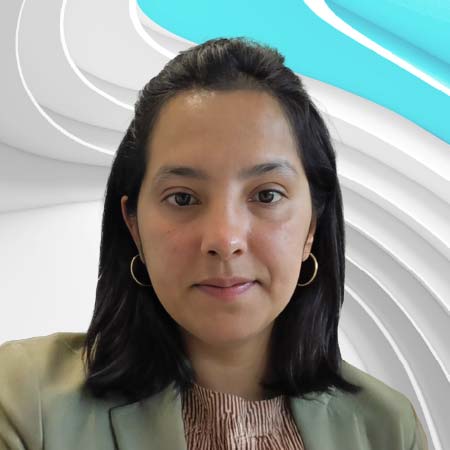
Garima Singh, Global Strategy Lead – Commercial Marketing, AkzoNobel, believes that increasing women in leadership requires stronger support systems both at home and at work.
“It starts at home — when young girls are trusted to make and own their decisions. It starts in hiring rooms — when we name and address the biases we know exist.
It starts on Day 1 at work — when women are made to feel they belong in leadership, not just in the room. But the pipeline alone isn’t enough. We also need to stop losing the women we already have.
Marriage, motherhood, caregiving — these transitions hit women disproportionately hard. A little more support at these inflection points doesn’t just retain talent, it accelerates it. The fix isn’t complicated.
See more women in leadership → believe you can be one. Simple as that.”
Find a mentor. A sounding board. For every phase of your career, you are navigating.
“Someone who has walked the path you are on now. Someone who can share the wisdom that you will yourself stumble upon a few years later (Saving you the time, energy & effort!)
And find a mentor for every phase in your career/life that you are navigating: Motherhood, Marriage, Country-change, Promotion. The most self-aware & secure women leaders I have known are also the most open to seeking help!
Seeking help isn’t a sign of weakness but of extreme self-awareness.”
Reducing the Motherhood Tax Is Essential for Leadership Equality

Stefania Hurtado, Former Regional Digital Account Director, Publicis Groupe, argues that addressing structural barriers such as the motherhood tax is critical to achieving real leadership equality.
“We need to first reduce the motherhood tax, both at home and at work, by creating more equal partnerships.
Women supporting women helps, but it is not enough on its own.
We also need systems that support leadership in a real way: flexible work policies, fair progression, sponsorship, and giving women opportunities before they feel they have to prove everything twice.”
I would give myself permission to explore more things earlier.
“Knowing that you do not need to have the full path figured out from the beginning. Clarity comes from movement, so explore, pivot, and transform along the way.”
About the Author
Ashutosh Zutshi is a correspondent exploring how brands are redefining marketing and CX. He uncovers the strategies, innovations, and trends shaping the way companies engage with audiences, turning complex developments into compelling stories that bring the evolving CX landscape to life.
View More