People Want Raw, Real Content
The consumer has evolved, and brands are trying to catch up. Keep the message simple, and build a community where people genuinely talk about your brand, says Layal Akouri, Partner and CEO at Nadine Njeim Beauty. Word of mouth today is far more valuable than running an ad.
Topics
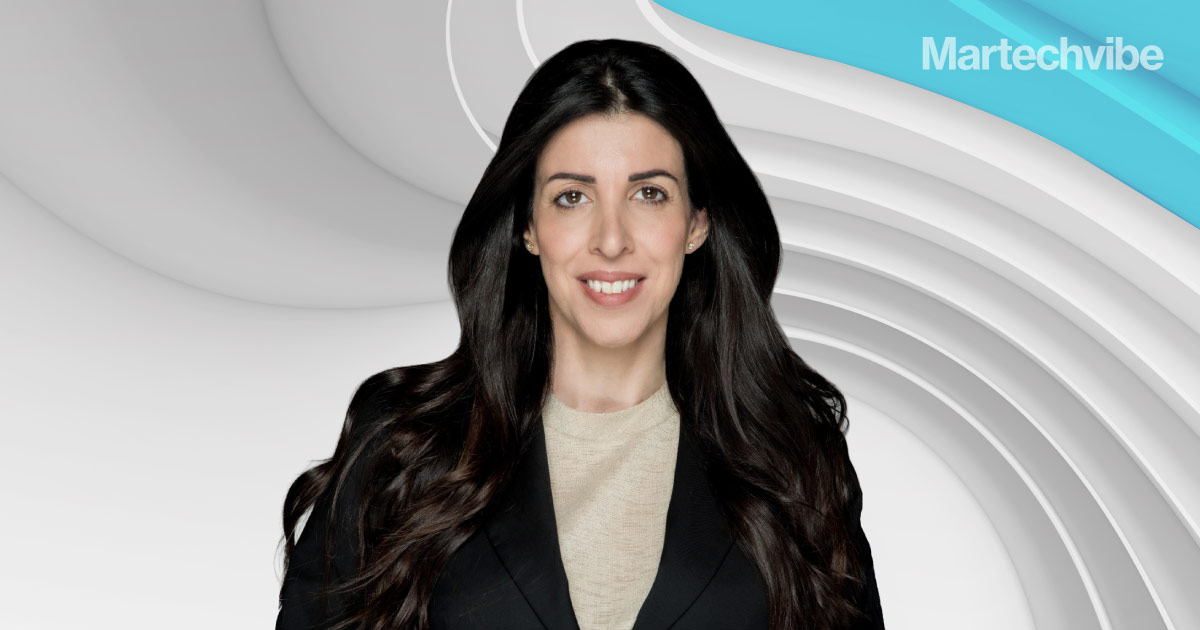
In 2024, Lebanese actress Nadine Nassib Njeim announced the launch of her eponymous label – Nadine Njeim Beauty. It is positioned for its ‘clean’ formulations, with this commitment grounded in the use of ingredients that are safe for both the skin and the planet.
Layal Akouri, Partner and CEO at Nadine Njeim Beauty, a clean beauty, vegan and cruelty-free brand that celebrates diversity and inclusivity, spoke at the SAP Emarsys Festival, an exclusive meet-and-greet for marketing and CX leaders for retail, hosted by SAP Emarsys and Martechvibe in partnership.
Excerpts from the interview;
Let’s start by hearing about your journey into C‑suite leadership and Nadine Njeim Beauty.
I’ve been in the region for the last 15 years. This is my fourth startup. Before this, I promised myself I wouldn’t do startups again, but I always come back. It’s tempting.
I started my career in Dubai after moving from Beirut, Lebanon. I’ve lived in Australia, the US, Qatar, and eventually settled in Dubai. I think I can call it home now.
With Nadine Njeim Beauty, we’ve built a very unique concept; it’s centred around clean beauty — which many call a trend, but for us, it’s a lifestyle. Women know that applying makeup every day can be a struggle for the skin. So we created a brand that makes your skin feel good while you look great.
In terms of driving revenue, retention, and overall experience — how do you see marketing’s role evolving?
There’s a lot of change happening. We’re all seeing it. Previously, consumers were influenced by almost anything — you’d get someone to talk about a product, and you’d get attention. Someone would create content that looked too good to be true, and people believed it.
Today, marketing trends have shifted. People want raw, real content. They want authenticity. Many of you in this room have your own marketing playbooks — you’ve been testing and learning for years. The region has evolved, the consumer has evolved, and brands are trying to catch up.
Keeping things raw and real, keeping the message simple, and avoiding paying people just to create content — that’s what works. Build a community where people genuinely talk about your brand. Word of mouth today is far more valuable than running an ad.
We all struggle with different platforms and applications. What matters most is keeping the customer engaged and spending your budget wisely. I come from a startup background — maybe many of you are from corporates — but for me, every dollar must generate ROI. It can’t go to waste.
Host: So, if I gave you $1, what’s the first thing you’d spend it on?
I’ve been monitoring live shopping for some time now. If you ask most people, they’ll say they’d spend it on digital, influencers, events, or activations. But live shopping — on Instagram and TikTok is growing fast. And both sellers and consumers benefit.
It’s an incredible opportunity. Companies built on live shopping are now valued at half a billion dollars within just a few years. There are many success stories in the US already. I believe live shopping is the next big thing in marketing and social media.
Host: And is it bigger on TikTok than Instagram?
It is, yes.
If you had to single out the biggest success for Nadine Njeim Beauty and what you focused on to achieve it, what would that be?
Look, the brand is unique because it’s the first Middle Eastern celebrity beauty brand. We’ve seen many influencers and bloggers do an amazing job, but a true celebrity-led brand — this is the first of its kind in the region.
When you look at brands like Fenty, Rare Beauty, Haus Labs — there are around 13 or 14 celebrity-led brands in the US and Europe — the marketing dynamics are completely different. With a celebrity brand, acquisition starts with a built‑in fan base. These celebrities come with an incredible audience, and that gives us a strong starting point.
So, instead of the usual journey of getting one order, then five orders a day, from the moment you launch, you suddenly find yourself handling hundreds of orders. It’s exciting, but it definitely challenges operations and customer service. At the same time, it significantly reduced our acquisition spend because we didn’t need to invest heavily in acquiring customers at the beginning.
So, how did you handle the operations and the surge in demand while keeping customers happy?
Operations is my game. I set up the warehousing in a way that if we were hit with 10,000 to 20,000 orders, everything would still go out within 24 hours.
We equipped ourselves with the right systems, the right training, and the right technology. When you’re dealing with huge volumes, you must have strong tech — otherwise, people break, mistakes happen, and wrong items get shipped.
Then, you end up spending your time fixing the experience instead of delighting customers. So from day one, we had no operational issues. We were fully prepared. I actually forecasted higher than necessary on purpose because I wanted everyone ready. Operations were solid.
Marketing was amazing. I remember when we launched — it was from a hotel room at the St. Regis. We didn’t even have an office yet. It was a raw startup, just 18 months old.
Today, every number we forecasted has been exceeded by multiple Xs. And customers are happy — we have thousands of reviews and a customer rating of 97%. With all the volume, we still deliver the same‑day or next‑day. We genuinely enjoy doing it.
Marketing, in particular, was fascinating to watch. In previous companies, you spend heavily on acquisition. But in this case, acquisition happened naturally for at least the first month.
After that, we started acquiring customers beyond the fan base — and that’s when the real acquisition journey continued. It’s very healthy because the face of the brand is well-known.
HOST: I want to pick up on that point. Acquisition is one thing — and in your case, having a built‑in fan base meant acquisition costs were almost nothing. But retention is just as important. Even with a strong acquisition, retention matters.
How important is retention, and how do you ensure it?
Personally, I am customer‑obsessed — and I don’t say that lightly. I’ve always relied on customer feedback. Keeping the customer engaged is extremely important.
Having the right technology in place, especially a strong CRM program, is essential. But at the same time, I think we’re lacking innovation in how we retain customers. We all receive so many emails every day — I unsubscribe from at least ten emails daily, and I’m sure many customers do the same.
So, if you’re sending an email or any communication — whether through WhatsApp or another channel — it has to be meaningful and relatable. I don’t want to receive an email saying, “We launched a new men’s t‑shirt.” I don’t care about that. My husband can buy his own t‑shirt.
But if you send me something I actually like — something I browsed — that’s different. Today, AI is a topic in every room, and we use it ourselves.
From day one, we had an AI/AR experience on our website. It doesn’t just allow customers to try on products — we analyse what they try, how long they spend on a page, and we trigger communication based on what they interacted with, not just what they browsed. It brings them closer to conversion.
Today, our loyal customer base is around 45%, which is very high for a new brand. You usually see that percentage after five years in the market, once acquisition slows and retention becomes the focus.
Retention has many dynamics. I remember when I was leading a Turkish brand — we had exposure to a customer base of 90 million. It was massive. But everything was personalised and targeted, and revenue from retention alone was over 35%, which is huge in a market that keeps expanding.
When you have 90,000 or more customers — how do you turn that data into trustworthy, actionable insights?
It’s about being close to the customer. And when I say close, I don’t mean the usual “you browsed this, so here’s this” approach. Many brands rely heavily on discounts. And now, with Black Friday, everyone is pushing discounts — customers love it, but too much discounting can hurt your brand positioning long‑term.
Think long‑term. With customers, you cannot think short‑term. It’s not about throwing discount codes at them because they browsed something twice. Eventually, they’ll feel like, “Everyone is wearing this, so why should I?” People love unique, exclusive things.
Look at luxury brands — they all have personal shopping for a reason. It’s an experience. You select a group of maybe 1,000 customers, invite them to your store, and personalise the experience. They feel important, exclusive, like they have access to things others don’t. That’s what works.
The most successful loyalty program today, in my opinion, is Emirates Skywards. They constantly push you to reach the next level. If you have the option to fly Emirates or another airline, you choose Emirates because you want to maintain your tier and your points.
I don’t think it’s the communication alone — it’s the benefits, how hard it is to earn them, and how easy it is to lose them.
Does this principle apply universally?
Yes, as a principle, it’s the same. The product can change — fashion, beauty, anything — but the experience and exclusivity are what keep customers engaged with your brand.
We have a lot of competition in beauty. But from day one, we launched our loyalty program focused on exclusive benefits. And because we have a celebrity on board, we can be even more specific. For example, customers get access to private brand events where the celebrity is present. Everyone wants to see Nadine — everyone is excited and wants to be part of it.
If I offer a discount — which we don’t — it doesn’t align with a premium brand. If you’re offering quality and customers love your product, discounts shouldn’t be your trigger. It’s the benefits you provide.
So, I’d say the benefits matter more than the product itself. The communication, the sense of uniqueness — that’s what makes it successful, no matter what the product is.
With so many products marketed as sustainable, organic, clean, or rare, what differentiates Nadine Njeim Beauty — why choose it?
Great question — I love that. What’s unique about this brand is that it took us around three years to decide to launch it. And we chose the most difficult category: beauty. Beauty comes with restrictions, sensitivities, and intense competition. You walk into Sephora or any store — competition is everywhere.
What we wanted to create was something you buy, use, enjoy, and don’t have to worry about — whether you’re wearing makeup or not throughout the day.
We chose the clean beauty route — which is extremely challenging. Clean beauty means there are more than 2,000 ingredients we do not use. If you look into it, you’d be shocked at how many brands still use those ingredients.
We are certified clean at Sephora, which means there’s a strict list of ingredients we cannot use — otherwise we lose our certification.
Our products are infused with skincare. It’s a hybrid makeup‑skincare brand. The serum you apply before makeup has niacinamide, so you’re getting skincare benefits while wearing it. Our lip glosses are actually lip care — lightweight, non‑sticky. Our blush has vitamins and oils. Everything is long‑lasting — unbelievably so.
This isn’t coming from us — we’re very transparent with customer reviews. We publish them exactly as they are.
When we launched, yes, the fan base helped. But fan bases buy once. What showed us we were on the right track is that today, when we launch a new product, more than 70% of transactions come from existing customers. That’s trust in quality.
We started online — customers couldn’t try shades or textures in person. They trusted us anyway. And still, 70% of new product purchases come from returning customers.
So our main USP is quality. And clean beauty.
I have a nine‑year‑old daughter. Like many parents in Dubai, she goes to Sephora. I worry because I don’t know what ingredients other brands use. But I trust her using our lip oils and glosses because I know they’re clean — suitable even for teens and kids.
Achieving this level of performance while being clean is extremely difficult. Usually, if you’re clean, you compromise on performance — unless you invest heavily in R&D. That’s why every product takes around a year of R&D to perfect texture, formula, performance, and longevity.
Are there other brands doing the same? Yes, and I’m happy to see more brands going clean. No one wants long‑term skin damage. We use makeup every day — we don’t want to feel “baked” under heavy formulas.
ALSO READ: AI Augments Martech. Less Hype, More Learning Curve