
Performance TV Takes Centre Stage as Digital Attention Fragments
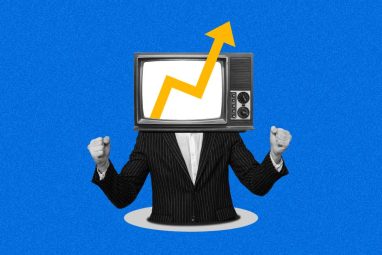
As digital attention fragments and performance pressure intensifies, marketers are repositioning television — not as a legacy branding channel, but as a measurable growth engine built for accountability.
Topics

Attention has become the most unstable currency in advertising.
Audiences are scrolling, skipping, and dividing their focus across platforms, while marketing leaders face mounting pressure to demonstrate tangible commercial impact. Media strategies built primarily on reach are under strain, particularly as performance accountability reshapes investment decisions.
Insights from The State of Performance TV in 2026 report from TVScientific, based on responses from more than 600 marketers across brands and agencies, suggest that television is undergoing a structural repositioning.
“Performance TV is no longer an experiment. It has matured into one of the most reliable and accountable growth channels in modern marketing,” said Jason Fairchild, CEO and Co-Founder of tvScientific.
“Performance marketers are no longer testing TV at the margins. They are moving the budget to make room for it and putting it at the centre of their media strategies. Performance TV delivers the scale of television with the precision, transparency, accountability, and fully transparent ROAS measurement marketers need to drive real business outcomes.”
Rather than treating TV purely as a brand-awareness layer, many marketers now evaluate it as a channel capable of delivering measurable business outcomes within an increasingly fragmented ecosystem.
As visibility becomes less predictable across social feeds and search environments shaped by AI, stability and demonstrable return are gaining strategic weight.
From Saturation to Strategic Rebalance
Digital platforms remain central to media strategies, yet competition within them has intensified significantly. Standing out in social environments demands relentless creative iteration, while search discoverability is increasingly mediated by AI-driven summaries and automated responses.
In this compressed environment, marginal gains require disproportionate effort.
Performance TV is emerging as a stabilising layer within the media mix. It is not replacing digital channels; instead, it is absorbing the performance expectations historically assigned to them.
Marketers identify several structural pressures influencing this recalibration:
- Reduced organic discoverability
- Heightened scrutiny around measurable return
- Compressed audience attention across devices
Budget reallocation reflects this reassessment. Investment is flowing towards environments perceived to offer immersive engagement and clearer outcome measurement.
Streaming Behaviour Has Redefined Television
Streaming has altered the mechanics of television consumption. What was once broad and fixed is now data-enabled, addressable, and measurable. Viewing behaviour has become personalised, and advertising within that environment has evolved in parallel.
Performance TV is increasingly associated with three defining attributes:
- Access to engaged, lean-back viewing environments
- Audience precision comparable to digital channels
- Measurement frameworks tied directly to business performance
Brian Robbins, Head of Affiliate Marketing at LG, illustrates this commercial validation, “We saw a 354% increase in 2023 year-on-year (YoY), a 1,100% YoY increase in 2024, and another 62% lift in 2025, which is well above normal programme averages. TVScientific has also shot up in the ranks from 16th to a top-five publisher this year.”
Such sustained growth signals that performance credibility is reinforcing television’s repositioning within media strategies.
AI Has Shifted the Burden of Proof
AI is now embedded across campaign planning, targeting, and optimisation. Its adoption is widespread, but adoption alone no longer differentiates marketers. Demonstrable commercial contribution does.
Within Performance TV campaigns, AI is most commonly applied to:
- Audience targeting
- Creative adaptation
- Accelerated testing cycles
Campaign cycles have shortened, and optimisation now occurs with greater precision. Leadership expectations have intensified accordingly. Measurable contribution has become central to both professional credibility and competitive positioning.
Channels that translate AI-enabled efficiency into quantifiable outcomes are gaining strategic favour in budget discussions.
Buying Television for Outcomes
Transaction models are evolving alongside perception. Flexible buying structures tied to acquisition or hybrid performance metrics are increasingly favoured over impression-only purchasing models.
Outcome priorities now centre on:
- Revenue growth
- Subscriber acquisition
- Demonstrable incremental impact
Marc Callipari, Chief Operating Officer and General Counsel at Photobucket, underscores this outcome orientation: “TVScientific’s platform not only promises but demonstrably delivers outcomes for our reintroduction campaign, resulting in over 1,775 new paid subscribers and a 25% increase in audience engagement.”
Results such as these contribute to television’s expanding credibility as a performance infrastructure rather than a standalone awareness channel.
Measurement Transparency Defines the Next Phase
Elevated investment has brought elevated scrutiny. Fragmented reporting, inconsistent standards, and siloed data remain persistent obstacles to seamless integration.
Marketers increasingly call for:
- Unified cross-channel measurement
- Clear attribution frameworks
- Greater transparency into incremental contribution
Without integration, television risks being isolated within the broader strategy. With integration, it strengthens its position as a measurable layer within a connected ecosystem.
Transparency has become as critical to trust as reach once was.
What Comes Next
Television’s repositioning appears structural rather than cyclical. Performance TV is being reframed as an adaptable infrastructure layer that blends immersive attention with performance accountability.
Its durability will depend on execution. Organisations that embed Performance TV within connected measurement systems and AI-enabled optimisation workflows are more likely to sustain competitive advantage.
Television is not displacing digital media. It is absorbing digital expectations—precision, accountability, and optimisation—within an environment historically defined by scale.
As attention fragments and scrutiny intensifies, media gravity appears to be shifting towards channels that offer both stability and proof.
Whether Performance TV becomes the enduring centre of media strategy will depend less on narrative and more on sustained, measurable performance over time.
ALSO READ: Streaming Is Becoming a Profitable Path for Advertisers